Showing posts with label Carlton Wilkinson. Show all posts

Friday, September 15, 2017

'Terrible Twos'


A new work of mine and eight other premieres, duets by living composers, will be performed at 7 p.m. Monday, Sept. 18 at William Paterson University’s New Music Series, on a program titled “Terrible Twos.” The music was commissioned by Composers Concordance, a group of longstanding currently led by Gene Pritsker and Dan Cooper that regularly performs commissions and performs works by its members. This concert is the first event of Composers Concordance 2017-18 season.
            The program is mostly duets, split between performers Gene Pritsker and Greg Baker, electric guitars; Keve Wilson, oboe, and Kathleen Supové, piano; and Peter Jarvis, multi-percussion and Michiyo Suzuki, clarinet/ bass clarinet. They’ll be performing work by Randall Woolf, Gene Pritsker, Peter Jarvis, Greg Baker, David Saperstein, Dan Cooper, John Clark, and myself. The concert finale will be “a large semi-aleatoric piece” that will include all three duos performing as a sextet. 
My contribution will be in the clarinet and percussion duets, along with new pieces by John and Peter. The title of mine is “Lunatic,” as it was started before the recent total eclipse that captured the attention of all of North America. The event seemed to underscore what feels like a surreal time in American life and culture, one where we’re wrestling with a kind of national psychological complex related to who we were and who we are as a country and a species. The overlay of that superficial fixation onto the underlying forces of creation, symbolized by the eclipse, reveals a colorful, dark landscape of anxiety.
            Admission is free. The concert is in Shea Center for the Performing Arts, William Paterson University, 300 Pompton Road, Wayne, NJ 07470. I hope everyone can come and support both the Composers Concordance and the university’s New Music Series. Both deserve high praise for their relentless efforts to promote new music in high quality performances.


            --C.     
September 15, 2017

theandofone.blospot.com

Saturday, September 29, 2012

Wilkinson's Edge

My latest for Asbury Pulp is in a style I haven't really used since college. I had a regular column then in the Trenton State College newspaper, The Signal, called "Wilkinson's Edge." Then-editor John Robinson had invited me to write a couple of articles and from there, encouraged me to step it up into a regular column. I would probably never have tried it otherwise. The column name was his doing and I always liked it. (For the record, I'm not related to the Wilkinson Sword Blade family that I know of.)

The style of those columns was free and snarky and the words flowed easily, like water out of a clean deep well. It was a joy to write those, to try to make myself laugh out loud as a I wrote them. At my first newspaper job, a small Princeton Packet Publications paper called The Franklin News-Record, I wrote one or two and my editor used the same name, "Wilkinson's Edge." At the Times of Trenton, a few years later, I ran one, toned down a bit, but still in the same vein. (To my knowledge, none of those are available online.) But since then, now writing mostly about classical music, I've restricted myself to a more serious approach, a more conservative style.

Writing this article on Mitt Romney (see the link below), I came back to that pure happiness, hammering away to make something a little silly and still opinionated and punchy. And I'm pleased with the result. With Asbury Pulp editor Steven Froias' encouragement, we decided to run it and it appeared Saturday morning.

I'm hoping to make it a regular part of my contribution there. Will be interesting to see how it develops.

--C.
www.theandofone.blogspot.com

On Facebook

Tuesday, September 18, 2012

Greetings From Asbury Pulp!

In addition to my work with the Asbury Park Press, I’ve started writing for the website, Asbury Pulp, an writers portal featuring commentary on websites, restaurants, visual arts, music and whatever else the community is talking about.

Today there’s a great article about Carrie Potter-Devening’s new book on the old Upstage club at Asbury Park, one of Springsteen’s boyhood haunts.

As that article and the site’s name imply, the principal focus of Asbury Pulp is Asbury Park, but its interests fan out over the region, the nation and the globe. The site was conceived and created by Steven Froias of the local paper TriCity News (the tri-cities being Red Bank, Long Branch and Asbury Park), a highly opinionated tabloid covering news and issues relevant to the region.

I had approached Steven a couple years ago about possibly doing some work for the TriCity, but obstacles popped up for both sides. So when he started the website, he contacted me again. This time it seemed an easy, natural fit.

My two articles so far:
Less hard news, more literary magazine, Asbury Pulp invites contributions from writers in the community. Visit the site, read and join in the conversation if you’re so inclined.

--C.
www.theandofone.blogspot.com

On Facebook

Tuesday, August 17, 2010

Apparently Abstract

A painter doesn't necessarily begin at the left edge; a writer doesn't necessarily write chapter one first. They rely on an overall design, a plan or an outline that only they know. Typically, nothing is set in stone during the creative process. Once the material is more or less complete--or at any point for that matter--the artist can go back and rework the entire form or touch up the details.

Music is the same way. It can be composed in a freewheeling straight line, beginning to end. Or it can be designed from outside of time, as it were, to fit a predetermined shape. Either one can appear improvisatory. And either one can appear to be self-referential, assuming the composer has a memory and can plan on the fly.

Writing serious classical music, I often set up an abstract form in advance, based on a certain quality of material--an interval set, a polyrhythm, a numerical series that influences several domains simultaneously. My drum set solo that Peter Jarvis premiered spring of '09, Jungle 5-7675 works this way. At other times I'll choose a simpler form that can be more easily elaborated and tweaked as I move through the composition process, as, for example, in the prelude Certain Dark Things that I orchestrated for the Monmouth Symphony Orchestra last fall.

When working in pop song styles, the same thing happens, even if the designs are more rudimentary. Each pop song represents a preexisting form chosen from a fairly limited universe. Within each, there is a nearly infinite amount of variation possible. Listen to the similarities and differences in the verse-chorus structures of any two Beatles songs. Or compare "Happiness is a Warm Gun," one of the more abstract song forms in the Beatles' recordings, to the Beach Boys' "Good Vibrations"--both use a juxtaposition of contrasting sections, but that's about all they have in common.

Nobody would argue with a songwriter who said he saw a creative opportunity in a particular form. Few would argue with Mozart or Brahms for choosing a sonata over a fantasia on any given day. But the choice of a more abstract form seems to raise hackles, precisely because the form isn't necessarily apparent to the listener. This even happens when fans of jazz or pop music try to engage with classical music for the first time--they think they need to be able to follow the intricacies of sonata form or fugue structure. They know just enough about it to know they are missing something, so they feel shut out from full appreciation. The more complex the form, the more likely we are to run into that kind of misunderstanding.

And it is a misunderstanding. Form should command the listener's attention only when the composer wants it to. Let's say I'm writing a piece that has a prelude-type form--that is, one idea extended from the beginning to end. As a composer, I may choose to divide up that music into much smaller bits of varying lengths to make the composition process more manageable and the overall shape more balanced. I may need that outline, but it doesn't need to be apparent to the listener. Then again, maybe I want the listener to hear those divisions, or some of them. Then it's up to me to mark them in some way--a dramatic change of harmony, an accent, a contrast of rhythm or timbre or dynamics. The notion that something changes at that point should be apparent. If the listener isn't hearing what the composer intends, the composer hasn't done his job.

Probably the most well-known example of this disconnect between formal design and the listening experience is Stravinsky's Symphony in C. This work was described by Stravinsky himself as a throwback to traditional form, "so unmysterious and so easy to hear on every level". But in 1962, Edward T. Cone's analysis of the first movement (from Musical Quarterly 48) found a detailed symmetrical map of phrase lengths that create syncopations against the constant unchanging time signature. This structure is highly remarkable because the work sounds, even to the most educated ears, like a perfect example of sonata form. But Cone's analysis revealed a hidden form that is arbitrarily sculpted to resemble sonata form: A wolf in sheep's clothing. This is one of the ways that Stravinsky always managed to sound like Stravinsky, regardless of the superficial details of style he chose to adopt. Would it matter to him that listeners typically don't hear the symmetrical march of integers guiding the phrase structure? No. The opposite in fact. As is evident from quote above, also from 1962, he intended the work to be heard in an open-faced sonata form; he could only have been magnificently pleased with the result.

Some composers--notably Charles Wuorinen, who knew Stravinsky and was one of my teachers--have chosen to draw elaborate details of form directly into the score. I have twice lectured on this subject, the relation between the written score and abstract forms--once at Rutgers University Graduate Composers Forum and at Kendall Kennison's composition seminar at Goucher. The value of these more eccentric scores relative to the final musical experience is debatable on a case-by-case basis. But composers continue to find them necessary. As such, they handily show off the split between the creative process and the listening experience.

Ultimately, when talking about abstract forms, it helps simply to be aware not only that the perceived form may be different from the composer's outline, but that the composer has already taken this into account. This was probably as true of Mozart as Messiaen.

Likewise, tracking the creative process can reveal many interesting things about a piece, but it may not be necessary for the enjoyment of the piece. Most composers are aware of this--although too many times I have heard composers in pre-concert talks launch into a "how it was made" lecture that makes the music sound about as interesting as a slide rule.

Performers, on the other hand, need to be constantly reminded: the score doesn't play itself. A successful interpretation depends on seeking out every detail you can find about the composer's intentions and then choosing how best to integrate those findings into a performance. The average crowd of listeners has it easier. They are the beneficiaries of all this work--if they don't get all of it, that's OK. As long as they know they don't have to. The music should speak for itself.

--C.
http://www.theandofone.blogspot.com

Thursday, August 12, 2010

Today's improv

I hope to record these more or less regularly. As I get a few minutes during the day, I'll sit down at the piano and just play whatever comes out. Usually I'm working over the same idea in two or three different sessions, sometimes more. But the idea itself is very, very basic--like here it's just some black key fourths and fifths in the left hand over a white key arpeggio in the right. That's the extent of precomposition. Then I just play and whatever happens, happens. This is from this morning. There's no rehearsal or multiple takes or editing or anything. I recorded directly to Facebook video using the camera on my laptop. So it's pretty raw. Love that.


--C.
http://www.theandofone.blogspot.com
If you're interested in knowing more about me, you can friend me on Facebook.

Tuesday, November 17, 2009

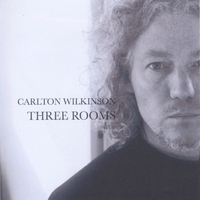
Three Rooms


Saturday morning, Nov. 14, I got the news that my newly completed CD, Three Rooms, is officially available for sale on CD Baby. You can order copies of the CD in a jewel case or download the mp3s individually or as an album. In the next few weeks, CD Baby will make the digital version available on iTunes and several other sites as well.

The songs on Three Rooms were all written over the course of a few months last year, and I spent a lot of time since then arranging and recording. I've gotten some very positive feedback about the production and the arrangements, as well as the songs themselves.

A storm swept through New Jersey on Friday 13th--a good omen for the end of a long creative project.

--C.
www.theandofone.blogspot.com